 es
es  English
 عربى
عربى
Noticias ·
Noticias ·
Noticias ·
Noticias ·
Noticias ·
Noticias ·
Noticias ·
Noticias ·
Noticias ·
Noticias ·
Noticias ·
Noticias ·
Noticias ·
Noticias ·
Noticias ·
Noticias ·

Publicado por JUDUN
Split Hydraulic Cylinder Jacks: Does Modular Access Matter
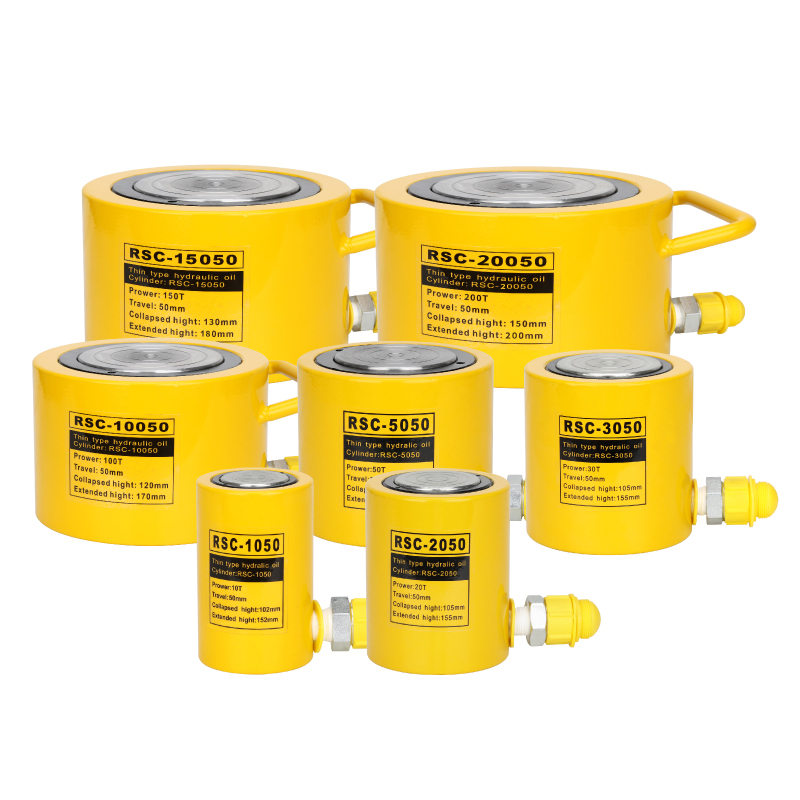
Hydraulic lifting equipment often works inside machine frames, crowded workshops or places where a normal jack cannot be put in easily. A split hydraulic cylinder jack works differently by separating the cylinder from the pump. This arrangement gives operators freedom to put the force-producing cylinder wherever needed while keeping the pump outside the tight working area.
This separation is not a packaging change. Cylinder height, working stroke, oil capacity, hose length, connection size and available installation space all affect how the system behaves when lifting, pressing, spreading or positioning.
1. Modular Layout Changes the Installation Strategy
Traditional hydraulic jacks often combine the lifting mechanism and operating controls into one assembly. A split configuration separates these functions. The hydraulic cylinder can sit beneath or beside the load while the hand pump stays in a more accessible location.
- Restricted access: The hydraulic cylinder can fit into spaces where a complete jack assembly would be hard to position.
- Remote operation: The operator can stay near the pump of reaching into the lifting zone.
- Flexible positioning: Hydraulic hoses allow the hydraulic cylinder and pump to occupy different locations.
- Simpler storage: Separate components can be transported and stored more easily in some workshop environments.
Public product specifications show split-type cylinders with body dimensions and short working strokes. One 30-ton example lists a 14 mm working stroke 62 mm body height, 75 mm diameter and 0.05 L oil requirement. These dimensions show why compact hydraulic cylinders can be useful around machine structures.
2. Hose Routing Becomes Part of the Design
Modular access creates another consideration: the connection. A longer hose may give positioning freedom but the route still needs protection from sharp edges, excessive bending, heat and mechanical interference.
- Connection size: Common hydraulic equipment may use threaded connections such as 3/8‑inch fittings depending on the hydraulic cylinder and pump configuration.
- Hose position: The hose should remain clear of moving components throughout the complete stroke.
- Oil volume: Hydraulic cylinder stroke and internal capacity need to match the pump’s oil supply.
- Pressure rating: Pump, hose, fittings and hydraulic cylinder should share pressure specifications.
These details become very important during repeated lifting cycles. A compact hydraulic cylinder may fit the space yet an unsuitable hose route can restrict movement or create unnecessary stress around the hydraulic connection.
3. Does Split Construction Affect Force?
The split structure itself does not automatically increase cylinder force. Hydraulic force remains closely related to pressure and piston area. The system configuration instead changes how the available force is delivered to the work area.
Consider a cylinder rated at 20 tons or 30 tons. The rating indicates the lifting or pressing capacity under specified hydraulic conditions. Actual performance also depends on pressure, piston area, alignment, load distribution and the condition of the pump.
Compact hydraulic cylinders can also have short strokes. Some thin‑type split hydraulic cylinders are listed with strokes from 7 mm to 13 mm across smaller 5‑ton to 20‑ton models. This makes them more suitable for controlled lifting or positioning tasks than for applications that need continuous travel.
4. Where Modular Access Makes Sense
- Machine installation: Tight structural areas may leave room for a complete hydraulic jack.
- Industrial pressing: The hydraulic cylinder can be placed directly beneath a pressing point while the hand pump remains outside the tooling area.
- Equipment positioning: Separate components can simplify access around machinery.
- Workshop lifting: Different hydraulic cylinder capacities can be paired with compatible hydraulic pump systems.
Some split hydraulic cylinder systems are specifically designed to work with electric hydraulic pumps rather than functioning as independent jacks. This means pump compatibility should be treated as part of the equipment configuration rather than as an afterthought.
5. A Different Way to Think About Jack Selection
The key question is not simply whether a hydraulic cylinder can lift the required load. Installation height, stroke, cylinder diameter, oil volume, connection type, pump capacity and hose routing all need to fit the working environment.
Split hydraulic cylinder jack systems make the sense where physical separation solves a real access problem. Their modular structure can place force exactly where it is required while keeping the operating equipment outside a crowded or difficult-, to-reach area.
¡No se pierda las últimas novedades! Contáctenos para obtener la información más reciente.
Enlaces rápidos
Productos
Contáctenos
Taizhou Judun Tools Co., Ltd.
Pueblo de Jungang, ciudad de Chumen, ciudad de Yuhuan, provincia de Zhejiang
Teléfono: +86-13967698556
Correo electrónico: judungongju@163.com
Copyright© Taizhou Judun Tools Co., Ltd.. Todos los derechos reservados.
